
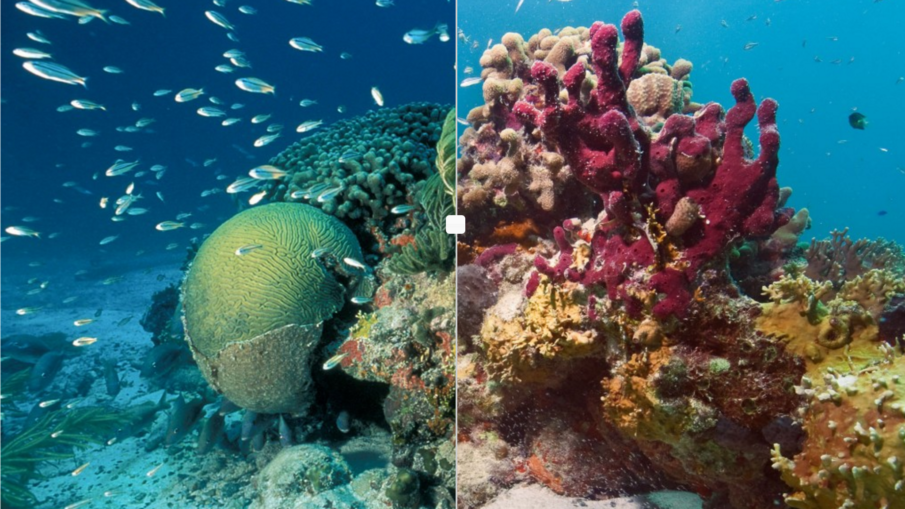
Interactive: View before/after slider here.
By Alyssa Raymond
David Arnold proudly hangs a picture of himself being arrested at a fossil fuel protest a couple years ago on the wall of his Boston home.
“I wanted to make sure that I kept a photograph ‘cause I want my kids and my grandchildren to know that I got it, I understood,” said Arnold, founder and photographer for Double Exposure which takes comparison photographs to illustrate climate change.
The Earth has passed the point of no return but it’s going to take more than recycling plastics and buying a fuel-efficient Prius, at least the way Arnold sees it.
He said regardless of what people do at this juncture the world is locked into warm temperatures. Arnold is still hopeful that it’s possible to keep the environment from being damaged further.
“We need government participation, [the climate change is] just too big,” said Arnold.
He believes the key is for the government to offer financial incentives for simple lifestyle changes such as not driving a car and living closer to one’s job, because without incentive no one will change.
After giving many presentations on the changing climate to audiences spanning from sixth-graders to adults, Arnold is confident that young people are aware of what’s happening to the Earth. But the problem is that they lack the understanding of just how important the environmental issues are and without an adequate understanding of the problem there can’t be enough passion to fuel the changes that need to be made.
He said the younger generation “has to be more than perceptive, [they] have to get angry.”
Regardless of the age group, Arnold punctuates the end of his presentations with the same set of photographs. The first shows the dark, murky Cuyahoga River up in flames, charcoal-colored smoke barreling up into the sky. It spontaneously burst into flames in 1952 and 1969 multiple times due to the immense pollution its waters endured. The Cuyahoga and Lake Eerie, where the river empties, were both “pronounced dead,” according to Arnold.
The second photograph is the same river, but now a glossy, pale blue surrounded by green grass with pops of red and yellow autumn foliage. This modern day Cuyahoga River is now a popular fishing destination, making Arnold’s point that environmental issues can indeed be fixed.
Leave a Reply