
By Lesley Ta
(Photo by Shaniya Brown)
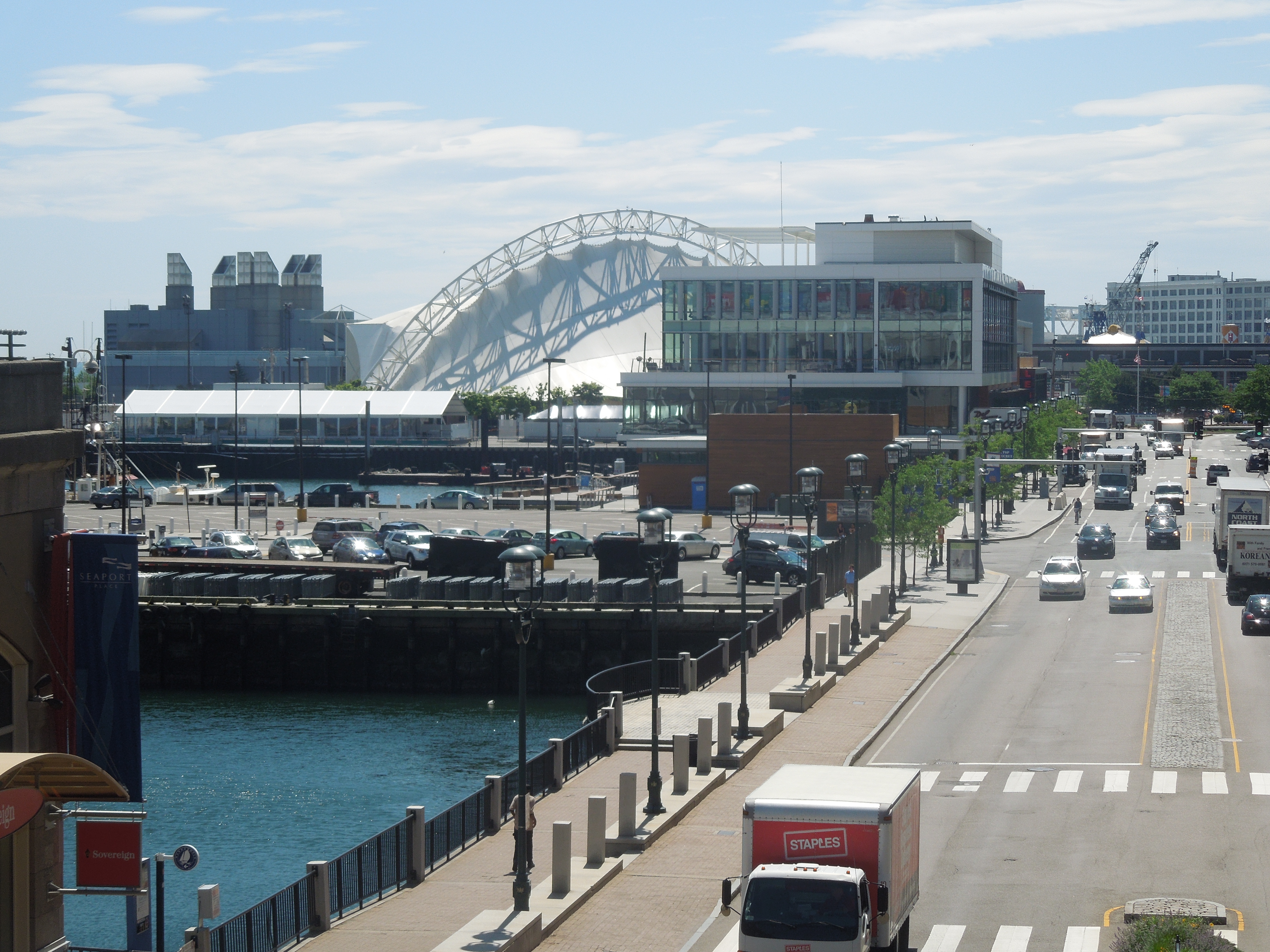
Once an unforgiving and silent area, South Boston’s waterfront has undergone a major makeover. For nearly fifty years, abandoned warehouses loomed over unforgiving streets as mobster James ‘Whitey’ Bulger stalked the region. Now hosting a collection of high end retail stores, classy apartment condos, and chic workspaces, the once dreaded area has begun to blossom.
Renamed as the Seaport District, this strip of land has quickly evolved into a popular tourist attraction. Boston’s historical roots have long provided adventurers loads to play with, however this community’s roots are finally being nourished by the water. Now often referred to as the “trendiest” place to hang out and relax, the Seaport is rapidly gaining popularity domestically and internationally.
“I do believe in urban renewal,” Elizabeth Rankar, a Boston tourist visiting from New Bern, North Carolina, stated, while waiting for the trolley tour with her young niece and nephew at the New England Aquarium.
Forty-five of the 266 redevelopment projects administered by the Boston Redevelopment Agency are based in South Boston.
Southie has a history of being avoided for its crime. Whitey Bulger, now awaiting trial for numerous criminal indictments, reigned over Southie in the 1970’s and 1980’s with his infamous Winter Hill Gang. Bulger’s disappearance for the past 16 years coincided with efforts to revive the territory.
The Massachusetts Port Authority had zoned the grounds on the waterfront to be used for marine industrial use. Cars were popular imports and were also transferred from those ports. Lavish new development in places like Fan Pier include: high quality fabrics and clothing available at LOUIS, sophisticated dining at Sam’s at LOUIS, Caffe di Marina, STREGA Waterfront, hotels & spas, and Fan Pier Marina, featuring varied recreational services.
“The area has been prime for development,” stated Chris Busch, Boston Waterfront Planner for the Boston Redevelopment Authority.
“It is intended to be exclusive and inclusive, vibrant and diverse. It is intended for live – work, and [recreation],” said Busch.
Against a clear water backdrop and rolling blades of grass, the Institute of Contemporary Art’s unique glass architecture operates as the heart of Southie.
“It is a space of opportunity. It centers the idea of sending a message. There’s no one single message,” explained Nancy Vega, Teen Arts Council Member of the ICA.
The council is hoping that the finished construction will assist in expanding their membership and significance to the district.
“We are in a hub that is being renovated and expanded every day. Changes are being made, restaurants, companies. It’s pretty exciting,” commented Gabrielle Wyrick, Massachusetts resident and Associate Director of Education at the ICA.
Fan Pier is The Fallon Company’s brainchild. Built in 1936, the ICA’s massive crystal design influenced modern day construction of Fan Pier’s surrounding vicinity. The existing edifices have set the foundation for the proposed framework ideas.
“It is not a historic neighborhood, it is a blank slate out there. There is opportunity for designs that are maybe more modern, [and we get to] utilize different building materials that complement the ICA,” added Busch.
“People enjoy the view, the area,” and “come back and explore,” said Vega as she motioned to the seascape through the ICA’s glass windows.
The new Seaport is also seen as a way to connect different neighborhoods.
“It’s not embedded in any neighborhood. [It’s] a site for gathers,” so it is “not segregated or defined by any neighborhood,” stated Wyrick.