
By Amanda Hayes
In today’s world, people are rarely seen without an iPhone in one hand and a tablet, e-reader or digital camera in the other.
The average teen sent and received 3,417 text messages each month in the third quarter of 2011, according to data from FunMobility Inc, a company that tracks statistical data. According to analysts, it is likely this number will rapidly grow every day.
Over the past 25 years, culture and technology – such as Facebook, Twitter and other social media websites – have joined to mold the social habits of young people. From this, there has been a revolution of new inventions in technology and social media that has caused major challenges to traditional business like the newspaper industry.
“The news is finding us, instead of us finding the news,” said David Gerzof, a social media professor at Emerson College.
Journalists are incorporating a great deal of technology into their work. It is now common to see these industries have their own Twitter and Facebook accounts.
“Journalists use social media to assemble a community of people who follow their work in order to engage in an ongoing conversation. They can use the assembled wisdom of the community to find sources and improve their reporting,” said Dan Kennedy, media analyst and journalism professor at Northeastern University.
Using technology is an efficient way to reach out to a wide variety of audiences. Since articles are now posted online, they can be seen all over the world.
According to Gerzof, the Emerson College professor, there are “tremendous” advantages to using social media, such as helping build a sense of community in society.
“I use my phone overwhelmingly, whether it is for work, video, internet or apps,” said a local Bostonian resident shopping at the Apple Store in Copley Square, who identified herself as Pat.
A walk through the doors of the most influential and technology-driven place around – the Apple Store – is a perfect testament to how dependent people are on technology today. Upon entering, customers were packed like sardines entranced with the Macs, iPads, iPhones and other products available to test at the store.
Cell phones have progressed from the 1989 Motorola MicroTAC a big, clunky industrious phone to the Nokia in the early 2000’s, to the Razr in 2004. They are now evolving to keyboard phones, internet phones and iPhones.
Apple Inc. has sparked pivotal change for technology. As of 2011, two-thirds of all mobile web browsing was done through Safari (Apple’s own internet browser), according to TechCrunch.com. In addition, there were 54 million active Mac users and of those 735 use notebooks instead of desktops. Also, in just 14 months, 25 million iPads were sold.
Betsi Graves, a tech-savvy customer at the Apple store says technology is “very vital” in her everyday life.
“My computer is broken. I feel like I lost my baby,” Graves stated.
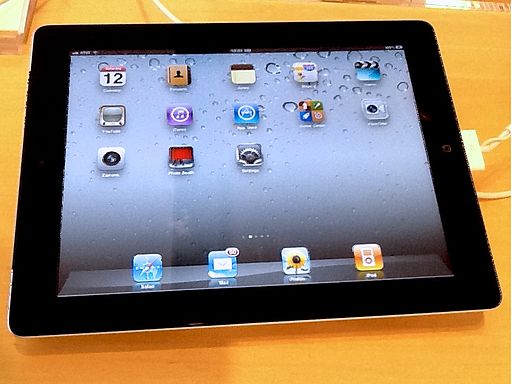
(Photo courtesy Wikimedia Commons)