

By Brianna Laffey
In the past 38 years, the Boston Harborfest has flourished thanks in part to the many improvements to the Harbor itself. Tourists have come from miles around to swim in the beaches and Harbor Seals have returned to the clean waters, according to the Boston Harbor Association.
“Boston’s waterfront is alive this summer with, the art festivals, cultural attractions and of course the concerts,” said Boston Mayor Thomas Menino. “ Summer on the Waterfront is an innovative way for residents and visitors alike to interact with this exciting part of our city.”
It begins in the last week of June each year, rain or shine. The purpose is to remember and honor the history of Boston. Some of the events include the Chowderfest, fireworks and guided tours of the historical sites.
More than 2.5 million people attend each year from across the country and around the world.
As the nation’s largest 4th of July celebration, the Harborfest has grown from being a three -day event with only 35 activities to a six- day event with more than 200 activities.
The area is undergoing a joyful revival in people visiting the many attractions the Harbor has to offer, and conditions have changed from the days when it was used as the city’s sewage dump.
“Almost everything near the Harbor have been built or improved since the Harbor cleanup,” said Julie Wormser Executive Director of the Boston Harbor Association.
The attractions vary from place to place. One of the harbor’s neighborhoods is Dorchester, which is home to Malibu and Savin Hill beaches. The most fascinating sections of the Harbor include historic Charlestown. When you stroll around Charlestown you will pass one of the oldest commissioned ships in US Naval history the USS Constitution, also known as Old Ironsides.
Unfortunately the harbor wasn’t always this inviting
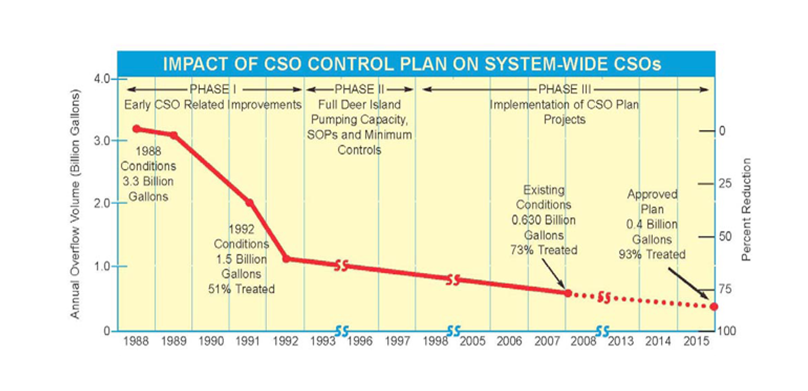
As Boston grew, the city’s waste began to exact a toll on the Harbor. In the late 1800’s State legislators approved the construction of the Boston Main Drainage System. The system redirected the sewage from 18 cities and towns to Moon Island where it was held for release with the outgoing tide.
By the 1930’s all shellfish taken from the harbor waters required cleaning. In 1940 planners suggested the construction of treatment plants at Moon Island, Nut Island and Deer Island
The waters got so bad that the harbor became the butt of jokes around the country, and inspired the famous song “Dirty Water” by the 1960’s band The Standells.
To maintain the improved conditions the City has put more trash receptacles near the waterfront. The city officials are also enforcing the no-littering rule, according to a Boston Harbor Cruise employee.